
Who Am I? A Personal Reflection on Identity, Self-Development, and Personal Growth, by Anișoara Laura Mustețiu
The Enduring Question
If there is a single question that has shaped philosophy and self-development for thousands of years, it is this: „Who am I?”
Few ideas have echoed through history with such enduring power as the ancient Greek injunction: “Know thyself.” Inscribed on the Temple of Apollo at Delphi and later embraced by Socrates as a way of life, these words express humanity’s oldest and most profound quest.
Over two and a half millennia have passed. We have built global civilizations, explored space, developed artificial intelligence, and created technologies the ancient Greeks could scarcely imagine. Yet, amid our modern marvels, the central human question remains unchanged: „Who am I beyond my achievements, my career, and the social roles I play?”
Philosophy sought the answer through contemplation. Psychology explored it through lived human experience. Today, neuroscience investigates the precise mechanisms through which the brain constructs our sense of self. The language we use to search for an answer has evolved, but the question itself remains timeless.
Who am I beyond my achievements, my career, and the roles I play? The Illusion of Achievement
Sometimes I wonder who I would be if, overnight, I lost everything I have built.
What if my profession dissolved? What if no one read my books anymore? What if every diploma, accolade, photograph, achievement, and round of applause vanished in a single day? Who would remain?
For many years, I believed that identity was built upon achievement—on what we accomplish, what we prove, and how others perceive us. Looking back, I recognize this as one of the greatest illusions of modern life. We define ourselves by our position, our online following, our athletic accomplishments, the books we publish, or the businesses we build. Unknowingly, we anchor our very sense of self to external success.
Yet success is inherently fragile. A business can fail, a career comes to an end, youth fades with time, children leave the nest, and the body ages. Eventually, we are confronted with a question few dare to face: ”If all of these external anchors disappeared, would anything of me remain?”
The Brain’s Evolving Narrative
Neuroscience reveals that identity is not a static object hidden somewhere inside the brain. Rather, it is an ongoing narrative—a story the brain continuously constructs about who we are. Like any story, it evolves throughout life, shaped by our choices and experiences.
This explains why, during periods of profound transition, people often say, “I no longer recognize myself.” In truth, the story they have been telling about who they are no longer matches the reality they are living.
I have observed this in my own life. There were years when I defined myself strictly through my profession. At other times, through high performance, or through the various roles I was expected to play. Looking back, I realize each of those identities was merely a single chapter—not the whole book.
Who Am I When No One Is Watching?
In recent years, I began writing fiction inspired by real-life experiences. Initially, I thought I was simply processing my past. Instead, the creative process forced me to confront a question I had quietly avoided for years: ”Who am I when I no longer need to prove anything?”
Asking that question proved to be extraordinarily liberating. I slowly discovered a part of myself that exists entirely independent of success or failure—a core that remains grounded even as circumstances, roles, and the world around me shift.
Psychology emphasizes the vital need for a stable sense of self if we are to navigate life’s inevitable transitions without losing our footing. The more our identity depends on external validation, the more fragile it becomes. Conversely, the more deeply rooted it is in core values, character, and meaning, the more resilient we grow.
One of life’s most transformative shifts occurs the moment we stop asking, “What else do I need to achieve?” and begin asking, “Who do I choose to become?”
The second question demands presence, conscious awareness, and authenticity. Identity is perhaps the most important thing we cultivate, because it dictates our choices, shapes our relationships, inspires true courage, and forms the bedrock of inner harmony.
Ultimately, the true journey of life is not about manufacturing a brand-new persona. It is about gently peeling away, layer by layer, the accumulated roles and expectations until we rediscover who we have been all along.
These days, I no longer measure my life solely by how much more successful I can become. Instead, I ask a simpler, far more demanding question:
Who am I when no one is watching?
For me, the answer to that question has become infinitely more valuable than any title, award, or public recognition. Success can be lost in an instant—but a person who truly knows who they are can never be lost.

LETTERS FOR MY SOUL, by Anisoara Laura Mustetiu
You don’t read this book to learn something. You read it to remember yourself.
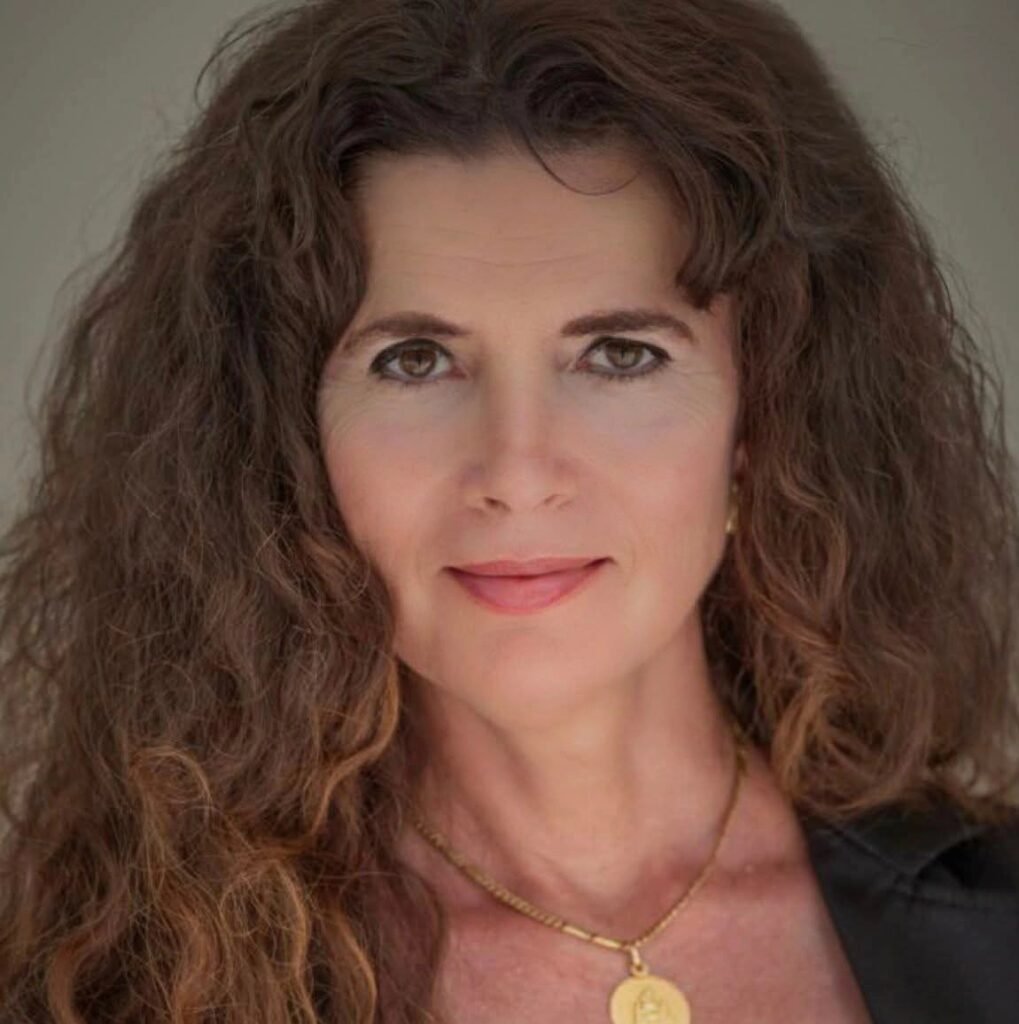
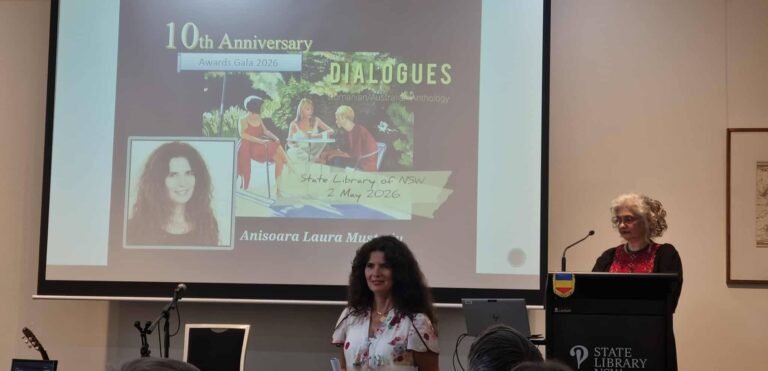
Anișoara Laura Mustețiu is a Romanian writer, born in Timișoara, who lived for 24 years in Germany and has been based in Sydney since 2014. She writes prose inspired by real events, love stories, and reflective texts on identity, resilience, personal development, and the meaning of life. With works published in Romanian, English, Italian, and German, she blends literature with insights drawn from psychology, neuroscience, and philosophy. As a writer, editor‑in‑chief of the magazine Emoții și Lumină, radio editor, founder of the Romanian‑Australian Book Club, and an active on‑stage participant in Romanian‑Australian cultural events over the past ten years, she contributes to promoting Romanian literature internationally and strengthening intercultural dialogue. Her books, published in four languages, are available in some of the world’s most prestigious bookstores — including Harvard Book Store, Barnes & Noble, and the royal Hatchards bookstore in London — and can be found in most major international cities.