
Beyond the Story. Ideas from Psychology, Philosophy and Science in ”Forgotten in Foreign Lands”
By Anișoara Laura Mustețiu
When I began writing Forgotten in Foreign Lands, I did not set out merely to reconstruct the story of a young woman who leaves Romania in the early 1990s and tries to find her place in a foreign country. I wanted to reach beyond visible events into that inner realm where experience is transformed into fear, memory, instinct, suffering, determination and, at times, a strength we do not even realise we possess.
I wanted to understand not only what happens to a person when she loses contact with her roots, her parents and the country of her birth, but also what takes place within her mind, body and soul.
Over the years, I have discovered profound connections between lived experience and the ideas I encountered in psychology, neuroscience, philosophy, mental training for high-performance sport and personal development. I came to understand that many of the reactions I could not explain in my youth did, in fact, have meaning. Fear, hypervigilance, instinct, sensory memory, inner dialogue, the need for safety and the capacity to carry on were not isolated states. They were interconnected parts of a complex survival mechanism.
Forgotten in Foreign Lands emerged from this meeting of life, literature and knowledge. It is a book inspired by true experiences, but also a search for the meaning hidden behind them.
Trauma Does Not Live in Memory Alone
One of the psychological dimensions I wanted to illuminate is the way the past continues to live in the body.
Ana carries with her more than the memories of a difficult childhood and adolescence. She also carries survival responses formed during years when safety was fragile and danger could appear without warning. In certain situations, her body reacts before her mind can understand what is happening: her heart races, her breathing becomes shallow, her muscles tense, and her thoughts rapidly construct threatening scenarios.
In describing these moments, I wanted to show that trauma is not simply a story we remember. Sometimes, it becomes a state held within the body. It remains in the way we breathe, in the way we startle, in our need to control our surroundings, in our difficulty trusting others, and in our tendency to perceive danger even when the present no longer confirms it.
The nervous system tries to protect us by drawing on what it learned in the past. This is why certain reactions may seem disproportionate to the present moment, even though they were once necessary for survival.
In one scene, Ana understands that her instinct is not necessarily a mysterious voice; it is also an internal alarm system shaped by experience, warnings and images embedded deep in her memory. To me, this realisation is very important. It marks the transition from unconsciously experiencing fear to consciously observing it.
Once we begin to observe our reactions, they no longer dominate us completely. We can ask ourselves: Is there a real danger, or is my body reliving an old threat?
Ana does not overcome fear by denying it. She learns to listen to it without allowing it to govern her entire life.
Not Every Thought Tells the Truth
Another idea woven into the novel is that not all our thoughts reflect reality.
The brain is constantly trying to anticipate what will happen next. It creates scenarios, makes predictions and interprets bodily sensations to prepare us for possible danger. This mechanism protects us, but it can also exaggerate threats, particularly when we are exhausted, wounded or under intense pressure.
During the cycling marathon, Ana notices how her mind sends her images and messages designed to frighten her. Physical pain, sleep deprivation and exhaustion make every sensation feel more threatening. Yet she begins to understand that a thought is not necessarily a verdict, and fear is not always a prophecy.
I believe this ability to step back from our thoughts is essential. When we believe every thought without examining it, we can become prisoners of our own minds. When we observe a thought, a space opens in which we can choose.
In the novel, Ana learns to stop telling herself, “If I am afraid, it means I cannot do it.” Instead, she asks, “What is this fear trying to tell me? Is it a genuine warning, or an old reaction?” She discovers that fear can be information rather than a command.
The Mind’s Lens
I also wanted to capture the way perception changes as we undergo inner transformation.
The world around us does not always become different. Sometimes, it is the mind that begins to see it through different eyes. A person who has lived for a long time in insecurity will notice threats, rejection and the possibility of loss above all else. Once that person begins to develop self-confidence, the very same reality may also reveal possibilities, kind-hearted people and paths that once seemed closed.
Through her experiences, Ana gradually develops new responses. She does not erase her past, but neither is she compelled to keep responding from within it.
This transformation is closely related to the idea of neuroplasticity: the brain’s capacity to change through experience, understanding, attention and repetition. The way we think, react and relate to ourselves is not fixed. Some patterns can change, even when the process is long and difficult.
For me, this is also where the novel’s hope lies: a human being is not condemned to remain forever what suffering has made of them.
“Give Me a Chance. I Will Never Let You Down!”
The interview scene at a company in the chemical industry occupies an essential place in both the novel and Ana’s development.
Her command of German is limited; she has not attended school in Germany and does not hold permanent residency. The person entering that office is not merely a young woman looking for a job. She carries with her the insecurity of an immigrant, the fear of rejection and an almost painful longing to build a future for herself.
Her body reacts immediately. Her knees weaken, her heart pounds, her breathing becomes shallow, and chaotic alarm signals overlap in her mind. For a few moments, old survival reflexes urge her to flee. She is overwhelmed by fear.
Yet a thought rises from deep within her: I have to succeed!
Ana meets the gaze of each of the three men and says:
“Give me a chance. I will never let you down!”
I placed an essential part of the book’s message in this line. Ana is asking for neither pity nor privilege. She is asking for the right to prove her worth. She has no guarantees, but she trusts in her ability to work, to learn and to honour her promise.
To me, courage is the power to act while fear is still present within us.
When one of the directors stands and offers her his hand, the gesture reaches far beyond the offer of a job. That hand opens the door to a new path. The trust of those three men meets Ana’s promise, and from that encounter emerges the possibility of a different life.
I wanted this scene to speak about our responsibility towards others as well. Sometimes, an opportunity offered at the right moment can change the course of a person’s destiny. An act of trust, an open door, or the willingness to recognise hidden value beyond an accent, a person’s origins, legal status or social vulnerability can transform not only a career, but an entire life.
The job gives Ana stability, but it also restores her dignity. For the first time, the future is no longer merely a territory of fear. It becomes a space she can shape through work, perseverance and belief in herself.
The Memory That Wounds and the Memory That Saves
Memory has a dual power in the novel. Some memories bring back pain, loss, hunger and humiliation. Others become resources for survival.
During the twenty-four-hour marathon, as Ana’s body approaches exhaustion, her mind carries her back to her grandparents’ garden. The tender grass, the flowers, the chicks with their yellow down, her grandfather’s song, and the aroma of polenta with her grandmother’s mushroom stew all return to her.
I constructed this scene through the senses because deep memory does not always return as an ordered narrative. It may surface through a scent, a colour, a sound or a sensation of warmth. Sometimes, the body remembers before the mind can find all the words.
At that critical moment, her grandparents’ garden becomes an inner place of safety for Ana. She is not simply escaping reality; she is recovering an experience in which she felt loved and protected. Her mind brings that sense of safety into the present and transforms it into a resource.
I wanted to show that human beings do not survive through physical strength or reason alone. We also survive through the images of love we carry within us. A voice, a melody, a scent or the face of someone dear can sometimes mobilise resources that conscious willpower can no longer reach.
Some memories wound us, but others keep us alive.
Inner Calm as a Form of Strength
Silence and inner calm occupy a central place in the book. I did not see them as an absence, but as a living space in which we can meet ourselves.
During her training sessions and the marathon, Ana uses breathing, concentration, meditation and mental imagery to regulate her inner state. She monitors her pulse, listens to her body, manages her energy and tries not to feed every threatening thought.
Her mind has gradually been trained to support her body. Her breath becomes a bridge between the two.
Today, we know how important it is to perceive signals from within the body: heartbeat, breathing, muscular tension, trembling, pain and changes in energy. This capacity is called interoception. For an athlete, it is crucial both for pacing effort and recognising physical limits.
Meditation does not make pain disappear. It does, however, change a person’s relationship with pain. Rather than becoming completely absorbed by panic, Ana tries to observe what is happening in her body and mind. A space emerges between sensation and reaction—and within that space, a choice becomes possible.
Through my own experience of ultra-endurance sport, I have learned that inner calm is not weakness. It can become one of the most powerful forms of self-control.
When Willpower Meets the Limits of the Body
The cycling marathon is where psychology, mental training and exercise physiology converge most intensely.
The body is subjected to extraordinary strain: prolonged energy expenditure, muscular pain, sleep deprivation, dehydration, nervous-system overload and a gradual loss of mental clarity. Music, breathing, pedalling rhythm, nutrition and concentration all become parts of the same survival mechanism.
The doctors explain the risks to Ana. Ultra-endurance exertion can affect the heart, muscles, breathing and nervous system. Through this warning, I wanted to introduce a difficult question: How far can willpower go before pushing beyond one’s limits becomes self-destruction?
I did not want to offer a simple answer, nor did I want to turn physical sacrifice into an ideal stripped of danger.
The mind may give up before the body has exhausted all its resources. Fear can sometimes exaggerate danger, but the body possesses a truth of its own. It sends warnings that must be heard. Courage sometimes means continuing, but at other times it may mean recognising a limit.
At the moment of crisis, Ana feels life draining from her. Her breathing grows faint, her mind is engulfed in fog, and her body becomes as heavy as lead. At that moment, triumph is no longer spectacular. There is no audience, no cameras and no desire for glory. There is only a human being confronting her own fragility.
And yet, even then, an inner voice refuses to abandon her.
For me, the marathon becomes a metaphor for her entire life. Symbolically, Ana began pedalling the moment she left Romania—sometimes with hope, at other times carried forward by sheer momentum, but always continuing. The sporting record makes visible an inner victory built over many years.
Resilience Does Not Exclude Vulnerability
Through Ana, I wanted to speak about resilience without idealising suffering.
She is not strong because she never cries, never feels afraid or never collapses. She is strong because, after every fall, she searches for something to hold on to and tries to rise again. Sometimes she finds it in another person; at other times, in a memory, a promise, her work, her faith or her own conscience.
Resilience is not a spectacular gift bestowed only upon certain people. It is built each time we find our way back. It is the capacity not to abandon ourselves when life wounds us.
I do not believe that suffering automatically ennobles us. Pain can destroy, and traumatic experiences can leave deep wounds. Transformation becomes possible when a person manages to integrate what has happened without reducing their entire identity to that wound.
Ana learns to look upon her wounds without shame. They are no longer evidence that she lacks worth; they become gateways to a deeper understanding of herself.
True strength does not mean being invulnerable. It means refusing to let vulnerability become a sentence.
Freedom Does Not Begin or End at the Border
Forgotten in Foreign Lands is also a novel about freedom.
Ana leaves Romania after the fall of communism and arrives in a Western world she associates with the hope of a better future. Yet she discovers that crossing a border does not guarantee inner freedom.
You can live in a free country and still remain a prisoner of fear, dependence, insecure legal status, humiliation or the feeling that you belong nowhere. Political freedom, social freedom and inner freedom are not the same, nor are they attained at the same moment.
In time, Ana’s true frontier moves from the outside world to the world within. It is no longer merely the border between Romania and Germany, but the boundary between the identity suffering tries to impose on her and the person she chooses to become.
We do not choose every circumstance of our lives. We cannot always choose our losses, the injustices we endure or the people who hurt us. But we can take part in shaping the meaning we give our experiences and the way we respond to reality.
For me, this is one of the novel’s fundamental philosophical questions: How much of our destiny is given to us, and how much is shaped by our choices?
Dignity Beyond Status
I also wanted to ask what remains when a person loses even the little they possess.
The answer I found is dignity.
Dignity does not depend solely on what we own or the position we occupy in society. It reveals itself in the way we work, the way we treat others, the promises we keep, and our refusal to allow ourselves to be reduced to victims.
At the end of the novel, Ana comes to believe that the miracle is not found in success or achievement. The miracle lies in who we are.
At the same time, I did not want to ignore the importance of social conditions. A person needs not only inner dignity, but also recognition, security and the opportunity to participate in the life of a community. An employment contract, a kind word, a gesture of respect or a professional opportunity can restore someone’s sense of personal worth.
Ana’s path, therefore, is not solely the result of her own will. It is also shaped by the people who choose to extend a hand to her. We rebuild ourselves through our own strength, but also through encounters that affirm we are worthy of being seen.
The Soul as an Inner Witness
The letter addressed to the Soul at the end of the novel brings together, for me, psychology, philosophy and the spiritual dimension of existence.
The Soul can be understood in a religious sense, as the deepest and imperishable part of our being, but also psychologically—as an inner voice, conscience, emotional memory and the core of identity.
I did not see the dialogue with the Soul as a departure from reality. On the contrary, it is the means by which Ana tries to gather the fragments of her life into a whole. She gives thanks to the part of herself that remained beside her when external support was absent.
Within this inner relationship lies one of the most important convictions I wanted to convey: a person can learn not to abandon herself—not to lose sight of who she is.
The Soul becomes the witness who never leaves, the friend who does not judge, and the inner space in which Ana can hold on to her sense of worth even when she feels defeated. Psychologically, this dialogue expresses the birth of self-compassion. Philosophically, it represents the continuity of the self beyond every role and social identity.
To me, science and the Soul are not adversaries. Science helps us understand the mechanisms through which we think, feel and react. The Soul leads us towards questions of meaning, love, consciousness and what remains of us beyond those mechanisms.
Science Explains the Mechanism. Literature Reveals the Experience.
Psychology and neuroscience can help us understand why the body enters a state of alarm, how memory brings the past into the present, how the brain anticipates danger, how breathing influences our inner state, and how repeated practice can change certain responses.
Philosophy helps us formulate questions about freedom, dignity, identity, responsibility and meaning.
Literature, however, allows us to experience these processes from within a character.
The reader does not simply learn that fear activates the nervous system, but feels Ana’s knees tremble before the people who have the power to determine her future. The reader does not merely discover that memory can contribute to emotional regulation, but enters her grandparents’ garden with her, smells the food and sees the chicks running through the grass. Rather than being given a definition of resilience, the reader follows a woman who continues to pedal when her entire being is on the verge of collapse.
This was one of my fundamental intentions: to reveal ideas through human experience.
I wanted psychology to have a face, neuroscience to carry emotion, philosophy to emerge from choices, and questions about the Soul to become more than abstract concepts. Science gives the mechanisms their names, philosophy searches for their meaning, and literature gives them a voice and a heart.
Forgotten in Foreign Lands is more than the story of an immigrant woman and the chronicle of an athletic achievement. It is the story of the human capacity to rebuild without denying fragility. It is a book about a mind that can be trained, a body that carries the traces of the past, a memory that can become a refuge, the people who can change our destiny by offering us a chance, and that inner center where the self continues to exist despite life’s cruelest trials.
Ana’s greatest victory is not the record she sets in the public eye. It is the fact that, after everything she has endured, she no longer sees herself as a victim.
Through her story, I wanted to convey that true strength does not exclude vulnerability. Sometimes, strength is born precisely from an honest confrontation with our own fragility.
Because some victories are not won before the eyes of the world. They are won when we face our own fragility.
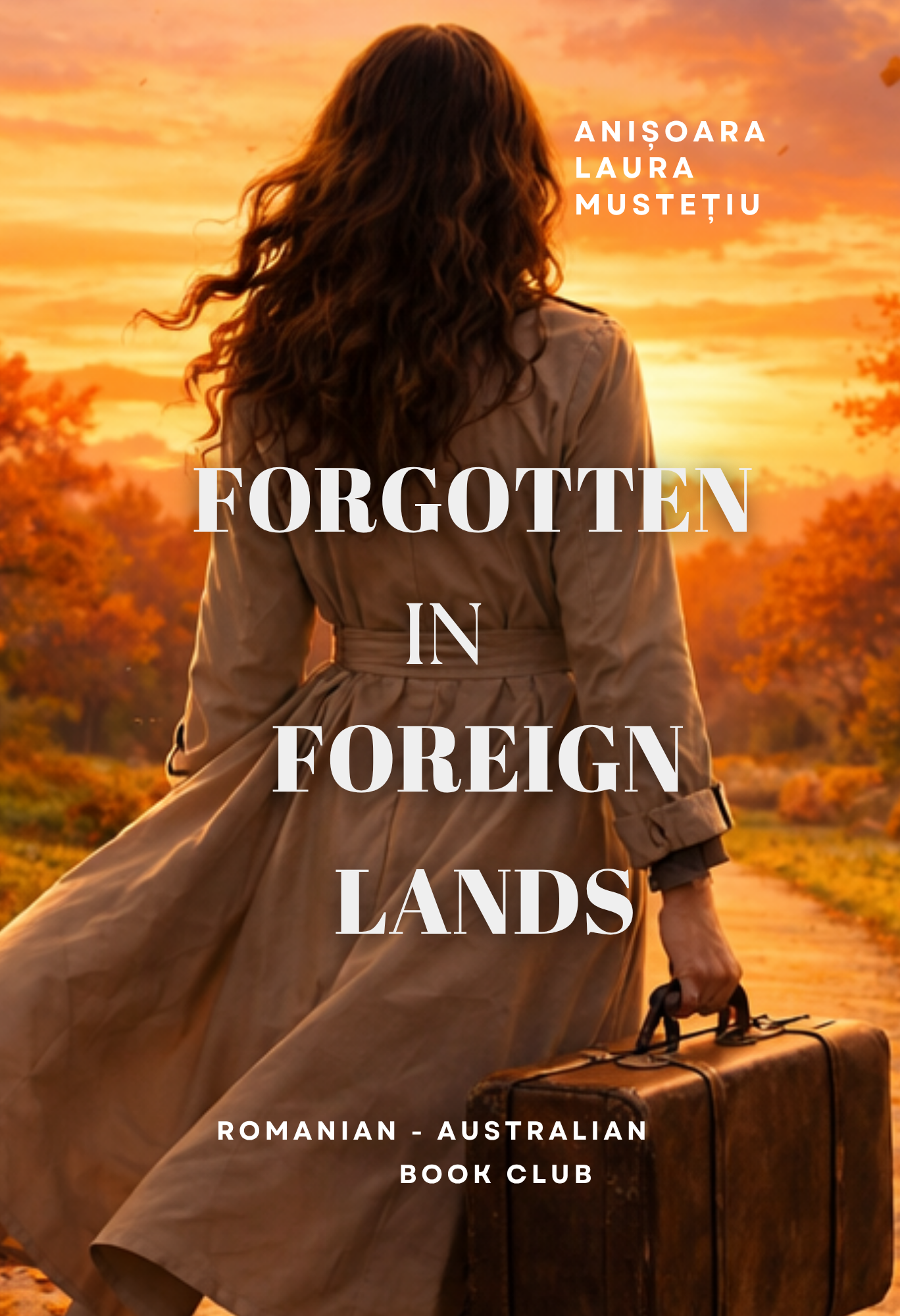
Available worldwide on Amazon and through international bookstores.
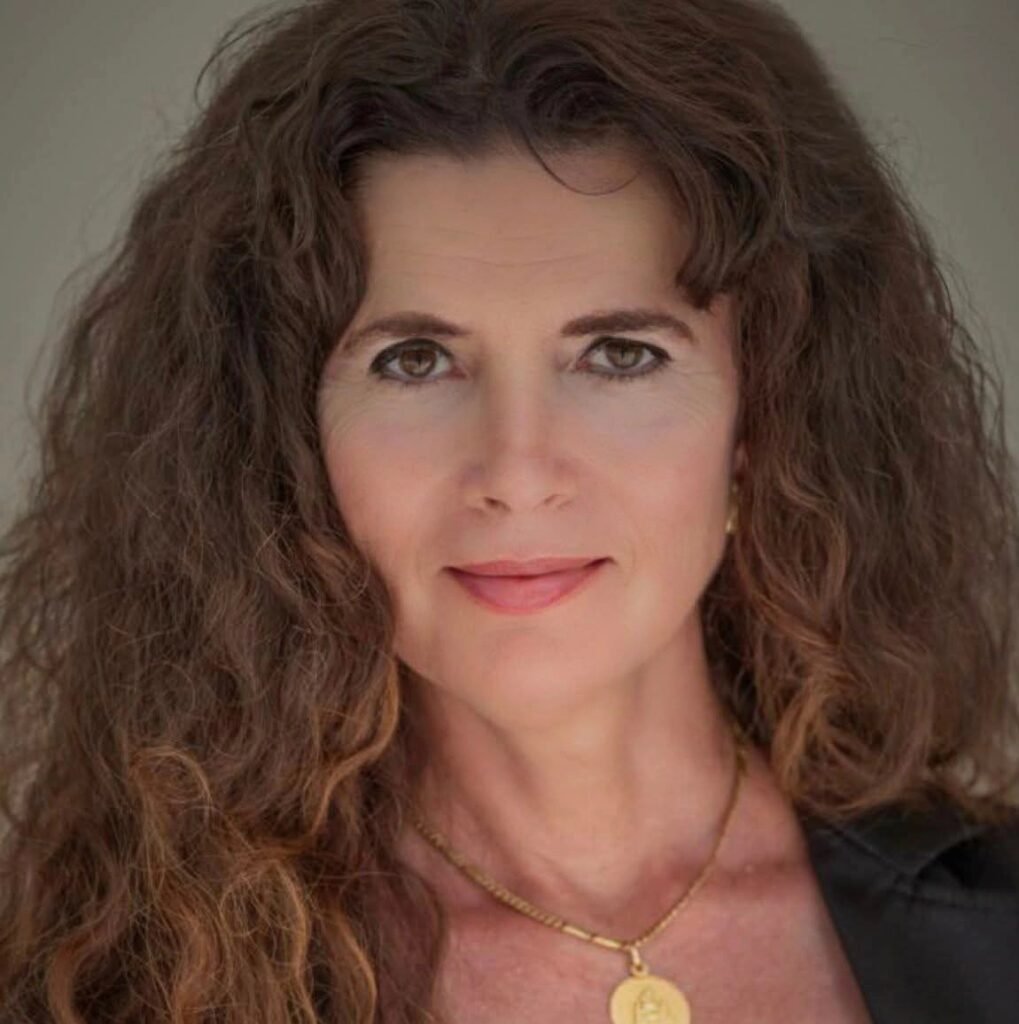
Anișoara Laura Mustețiu is a Romanian writer, born in Timișoara, who spent 24 years in Germany and has been living in Sydney since 2014. She writes prose inspired by real events, love stories, and reflective texts on identity, resilience, personal development, and the meaning of life. With works published in Romanian, English, Italian, and German, she blends literature with insights drawn from psychology, neuroscience, and philosophy.
As a writer, editor‑in‑chief of the magazine Emoții și Lumină, radio editor, founder of the Romanian‑Australian Book Club, and an active on‑stage participant in Romanian‑Australian cultural events for the past decade, she contributes to promoting Romanian literature internationally and strengthening intercultural dialogue. Her books, published in four languages, are available in some of the world’s most prestigious bookstores — including Harvard Book Store, Barnes & Noble, and the royal Hatchards bookstore in London — and can be found in most major international cities.