The Parts of Us That Receive No Applause – Anisoara Laura Mustetiu
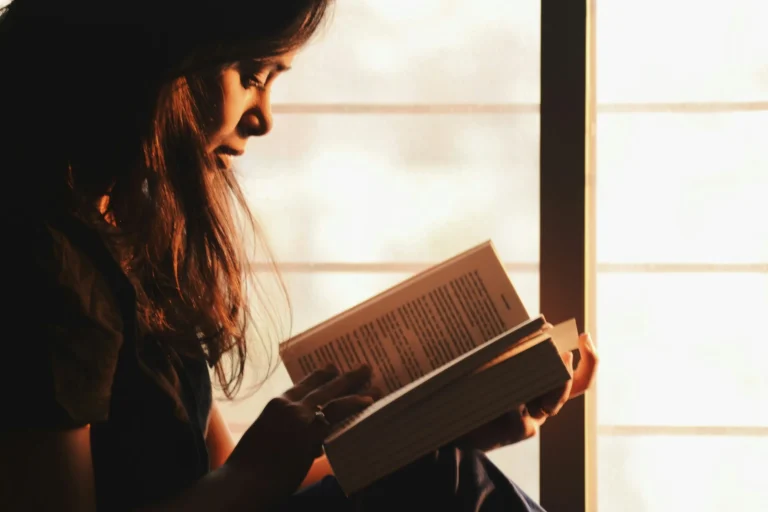
Photo by Allyssa Sayers on Unsplash
What success, fear, and fragility can teach us about who we really are
There is a question that has followed human beings for thousands of years: Who am I?
The ancient Greek words Know thyself, inscribed at the Temple of Apollo at Delphi, still feel surprisingly modern. We have changed almost everything around us since then. We have crossed oceans and continents, explored space, built artificial intelligence, and created ways of communicating that previous generations could never have imagined.
Yet we still struggle with the same question. Who am I beneath what I do?
Who am I beyond my profession, my accomplishments, my relationships, my reputation, and the way other people see me?
I used to think the answer was easier than it actually is.
When achievement becomes identity
Sometimes I ask myself what would happen if everything I have built disappeared. What if nobody read my books anymore? What if the diplomas, photographs, awards, accomplishments, public recognition and applause were suddenly gone? Would I still know who I am?
For much of my life, achievement gave me a sense of direction. Working hard, learning, writing, performing well and moving forward became ways of understanding myself. There is nothing wrong with achievement. I still value it deeply. The problem begins when achievement quietly becomes evidence of our worth.
Then every success reassures us, and every failure threatens something much larger than the failure itself. Modern life makes this easy. We introduce ourselves through professions. We count followers. We display qualifications. We talk about what we have built, published, earned, completed or survived.
These things tell part of our story. But only part.
I have lived long enough to know that circumstances change. Careers end. Relationships change shape. Success has seasons. Recognition comes and goes. If identity rests entirely on things that can disappear, it becomes a fragile place to live.
That realization was uncomfortable because it forced me to look beyond the version of myself I was happiest to present to the world.
The parts of me that receive no applause
Who am I when nobody is watching? The answer is not always impressive. I am also the woman who cries. I am the woman who has known fear and, at times, despair. I have stood beside people I admired and suddenly felt very small, even when I had no rational reason to diminish myself. I have had sleepless nights trying to find solutions. I know what happens when a problem enters the mind late at night and grows larger with every thought. And I know the stories the mind can create. Stories about what might happen, about what another person’s words might mean, about being rejected, forgotten, not good enough, not safe enough, not successful enough.
Some of those stories felt completely real while I was living inside them. But feelings and facts are not always the same thing. Over time, I learned that some of the stories in my head had to be tested against life. Some had to be corrected through action. Others simply needed time before I could see them more clearly.
Sometimes I had to say something much less sophisticated than anything I had learned from psychology or philosophy: I am afraid. There is something strangely freeing about admitting that.
For years, I may have been more comfortable showing the woman who works, writes, achieves, endures and finds solutions. I knew how to respect that woman.
Learning to respect the vulnerable one has been more difficult.
Today I understand that they are not two different women. The woman who succeeds and the woman who is frightened belong to the same life. The woman who receives applause and the woman awake at night searching for an answer are both me.
And maybe knowing ourselves begins there — with the parts that receive no applause.
The story we tell ourselves about who we are
Psychology and neuroscience have changed the way we think about identity. The self is not simply a fixed object hidden somewhere inside us. Our sense of who we are is constantly being shaped by memory, experience, relationships and the meaning we give to what happens.
In that sense, identity contains a story. And stories can change.
This helps explain why major transitions can feel so disorienting. A person leaves a country, loses a profession, ends a relationship, becomes a parent, retires, becomes ill, succeeds unexpectedly or fails at something that once seemed certain. Suddenly the old description of the self no longer fits.
I recognise this from my own life. There were years when I defined myself through work. At other times, physical endurance and high performance became important parts of my identity. There were also roles I carried because life required them of me.
Each identity was real. None of them was the whole of me. That distinction took me years to understand.
Writing brought the question back
In recent years, while writing fiction inspired by real experiences, I found myself returning to parts of my past that I thought I already understood. I expected writing to help me tell a story. Instead, it made me ask questions.
Why had certain experiences stayed with me for so long? Why did some memories still carry emotion decades later? Why had I needed to prove certain things to myself?
And beneath many of those questions was another one:
Who am I when I no longer need to prove anything?
I don’t think I found one dramatic answer. It happened more quietly than that. I began to notice the difference between what I had accomplished and what I valued. Achievement tells me what I have done. Values tell me how I want to live. Courage matters to me.
So do dignity, curiosity, loyalty, independence, love, learning and the ability to stand up again after difficult periods. These things are less visible than accomplishments. There is no certificate for them.
Nobody applauds every time we choose patience instead of reaction, or when we correct one of our own assumptions, or when we get up after a night of fear and continue with the day in front of us.
Yet those small choices probably reveal more about identity than many public achievements do.
Who do I choose to become? For a long time, one of my recurring questions was: What else can I achieve? I still ask it sometimes. Ambition has not disappeared from my life, and I would not want it to. But another question has become more important:
Who do I choose to become while I am achieving it?
That question changes things. It asks how I treat people when nobody is rewarding me for it, how I respond to fear… whether success makes me more secure or simply makes me hungry for the next confirmation.
It asks whether I can admire another person’s success without using it as evidence against myself… or if I can remain on my own side when I am disappointed in myself.
Those questions are harder than collecting achievements because they cannot be answered once and filed away. We answer them repeatedly through the way we live.
Knowing myself does not mean never being lost
Knowing myself does not mean I never feel afraid, uncertain, or caught in old patterns. I can understand where a fear comes from and still feel it in my body, I can be confident one day and question myself the next, and I can achieve something meaningful and still find myself comparing my life with someone else’s.
Self-knowledge does not make me less human. What it changes is how quickly I recognise what is happening.
I have learned to stop and ask myself: Is this really what is happening, or is my mind filling in what I do not yet know? An emotion can tell me something important without necessarily telling me the whole truth. A difficult moment does not have to become the definition of an entire day, or of who I am.
For me, this has become a more honest understanding of self-knowledge. These days, when I return to that old question — Who am I? — I no longer look only at what I have built.
I think about the woman who built it: her courage and contradictions, her ambition and fears, the moments when she succeeded and the moments when she felt small. I think about the nights when she had no answer, the mornings when she got up anyway, the mistakes she corrected, and the things she is still learning. All of these belong to the same person.
I believe there is something beautiful in discovering the parts of ourselves that receive no applause, learning to appreciate them, and allowing ourselves to be seen — even by ourselves — simply as we are.
Anisoara Laura Mustetiu
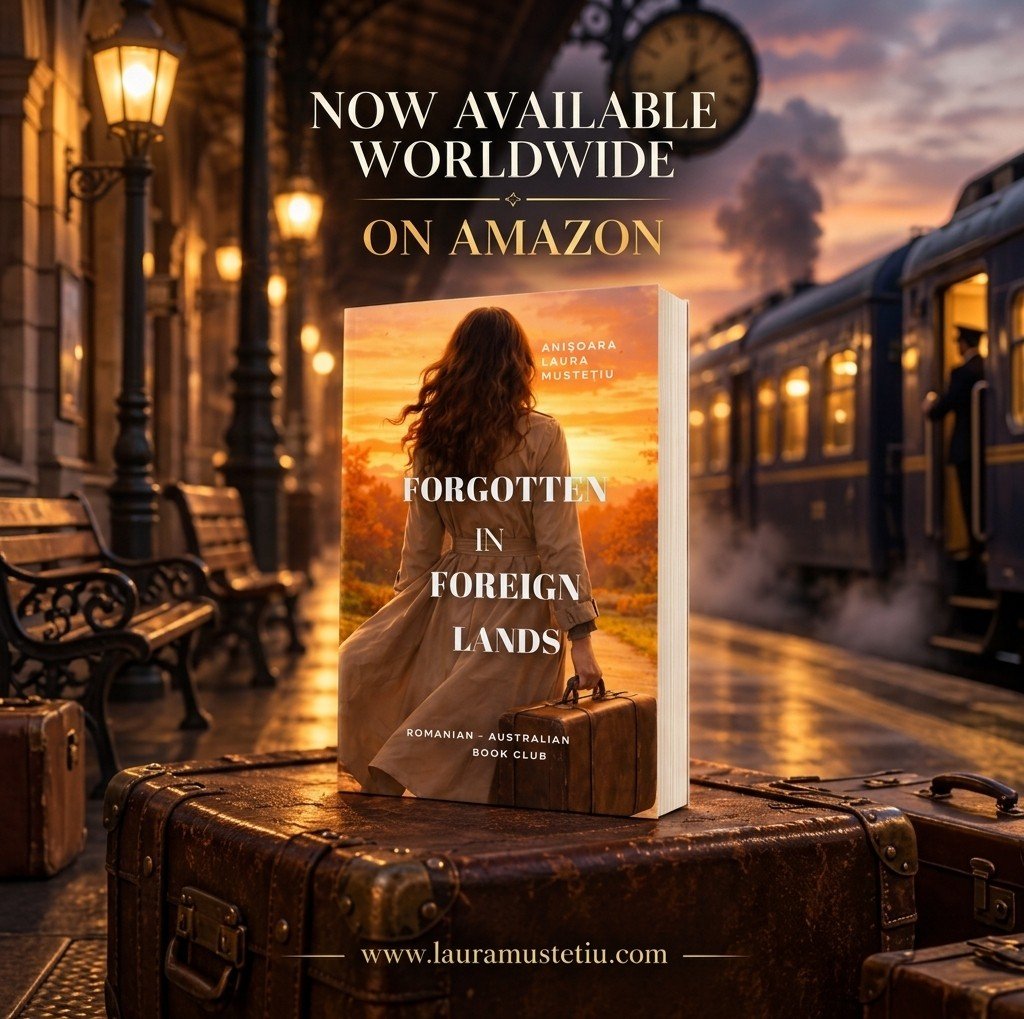
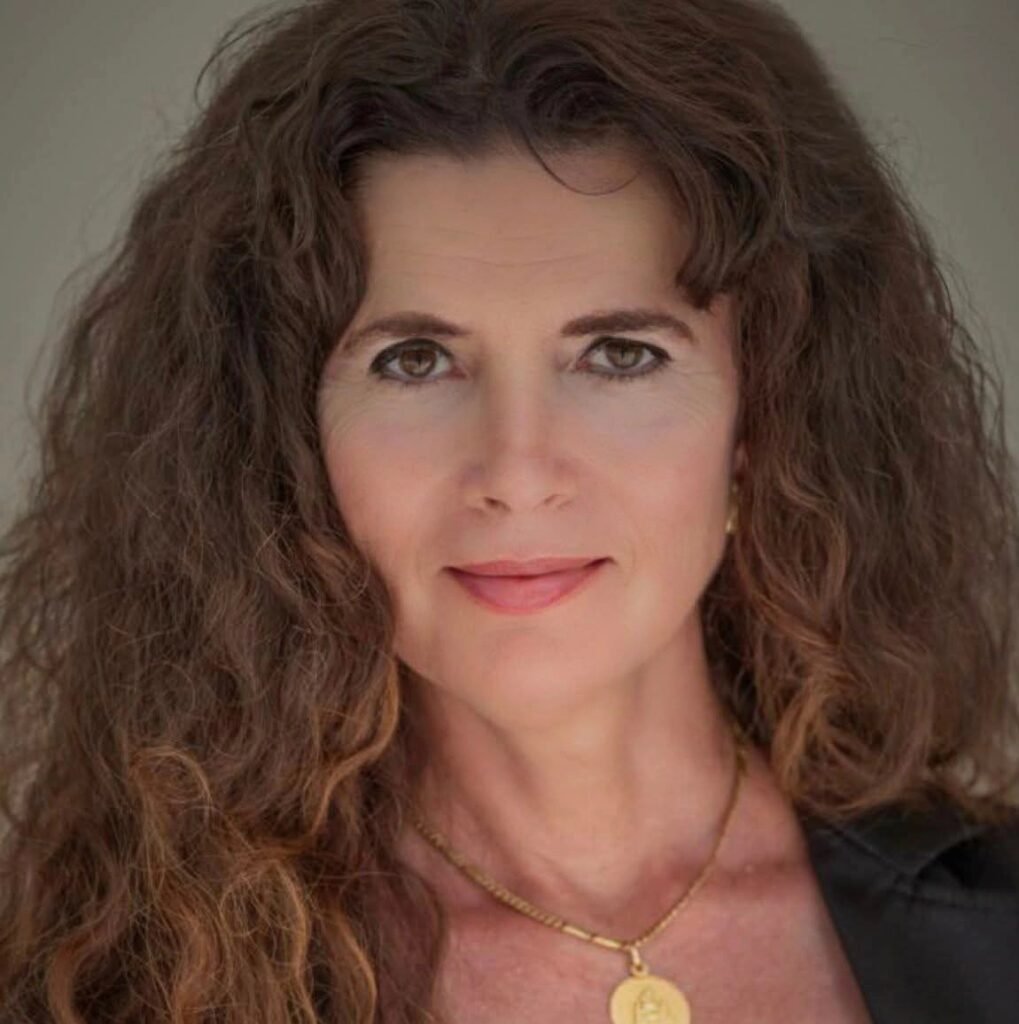
Anișoara Laura Mustețiu is a Romanian writer, born in Timișoara, who spent 24 years in Germany and has been living in Sydney since 2014. She writes prose inspired by real events, love stories, and reflective texts on identity, resilience, personal development, and the meaning of life. With works published in Romanian, English, Italian, and German, she blends literature with insights drawn from psychology, neuroscience, and philosophy.
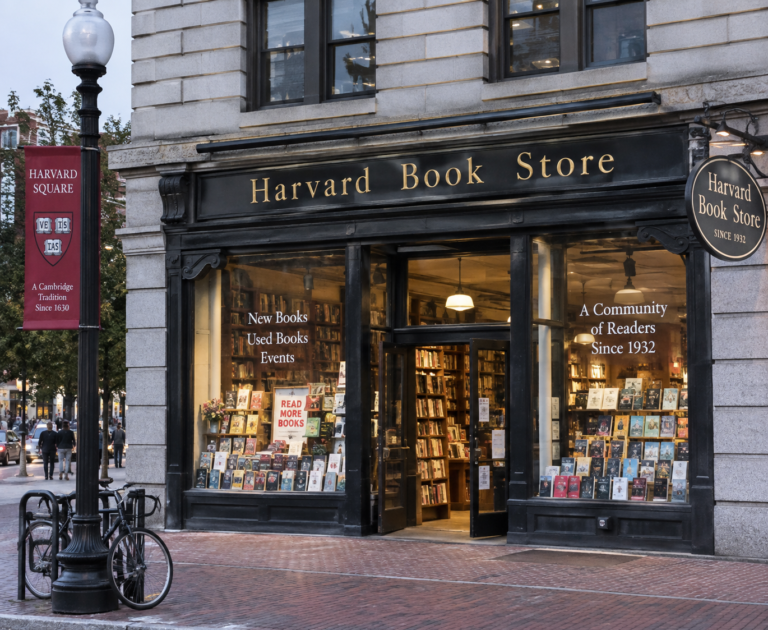
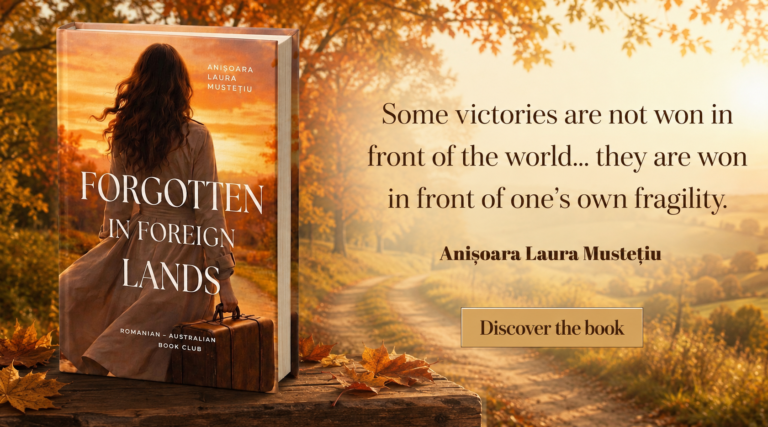
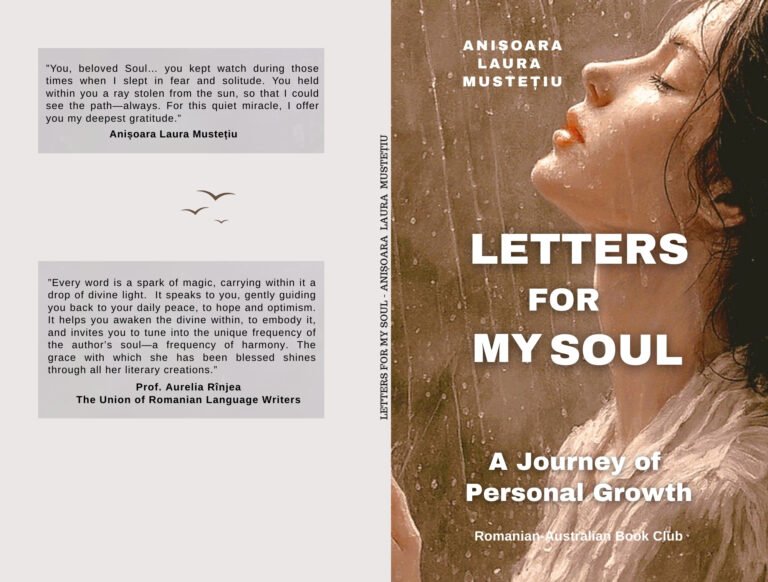
As a writer, editor‑in‑chief of the magazine Emoții și Lumină, radio editor, founder of the Romanian‑Australian Book Club, and an active on‑stage participant in Romanian‑Australian cultural events for the past decade, she contributes to promoting Romanian literature internationally and strengthening intercultural dialogue. Her books, published in four languages, are available in some of the world’s most prestigious bookstores — including Harvard Book Store, Barnes & Noble, and the royal Hatchards bookstore in London — and can be found in most major international cities.