Why Women Write – Prof. Florica R. Cândea on “Letters for My Soul”
By REVISTA EMOȚII ȘI LUMINĂ
November 27, 2025
Translated from the Romanian language.
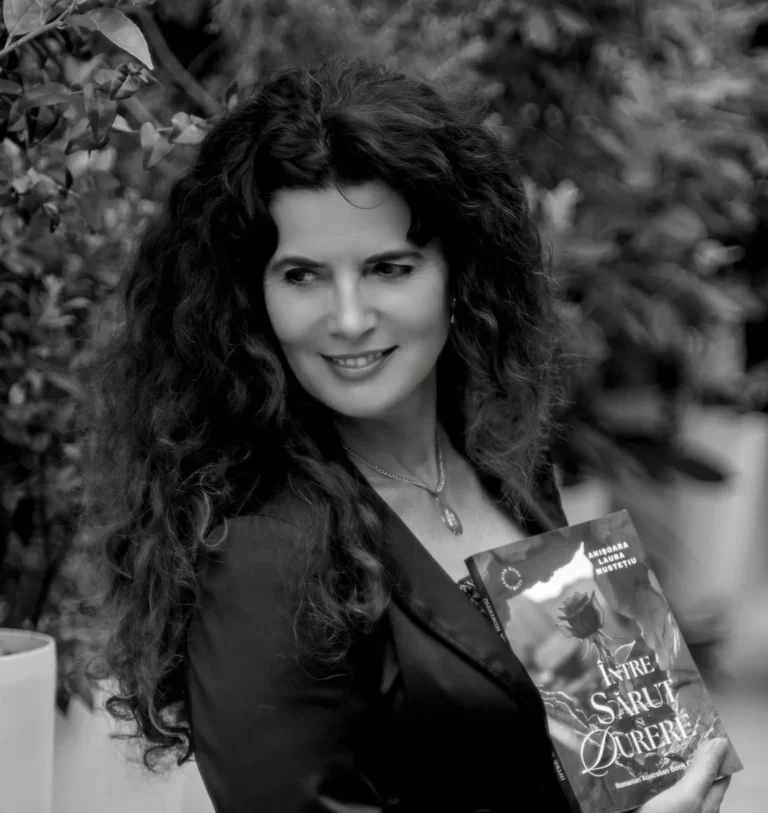
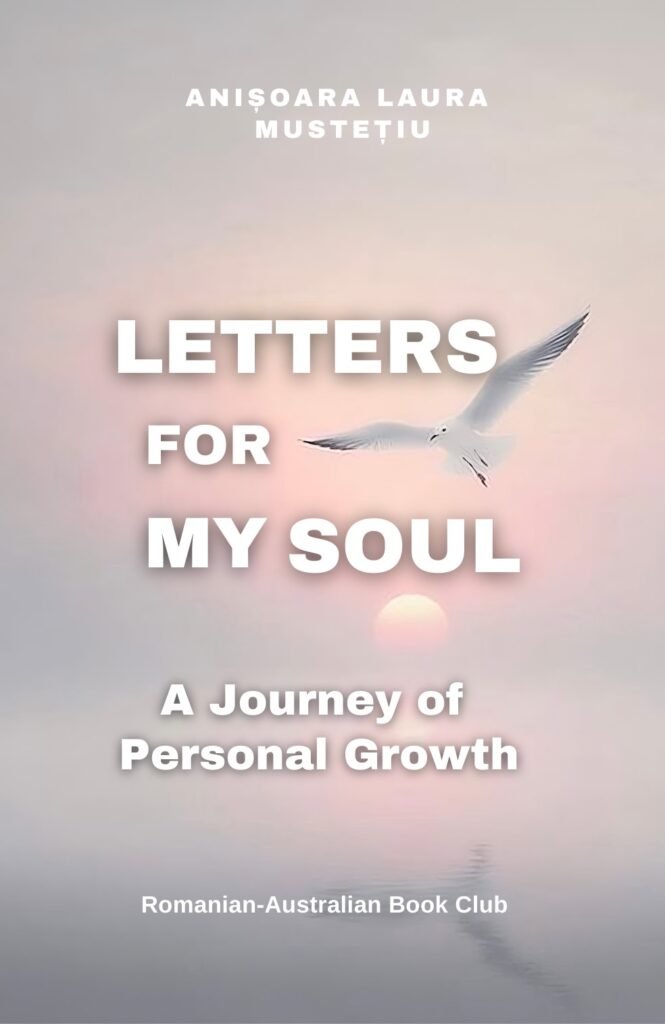
Anișoara Laura Mustețiu, Letters for My Soul. Romanian-Australian Book Club, Sydney, Australia, 2025, 128 pages.
Personal Development Book, Anișoara Laura Mustețiu
Context
Somewhere deep within us lies a certain meaning of existence, which we inevitably make unique. Thus, everything we have heard and lived over the years—with or without stereotypes—we feel the need to share.
We ask ourselves: is it good, or not, to regiment ourselves, to think rigidly, to measure our lives, to change our way of being, and to reflect upon our own experiences (and to stop being our own enemies)?
Over time, we will realize who we are, only through the principles we assume. We will be fascinated by changes, stories will become relevant, and we will begin to feel new attitudes (from our own perspective).
In the same way, we will discover that a journey—literal or metaphorical—will absorb us, honor us emotionally, and… the soul… will not resist.
Content
One of the most sought-after and successful themes today are those based on keys, bridges, answers, and imaginings—for or about the soul.
The volume’s title contains two common nouns: one unarticulated, the other articulated with the proclitic article “l”, joined by the possessive pronoun “my” (linked through the phrase “for”).
Anișoara Laura Mustețiu writes to a Soul—but not just any soul:
“12 dated letters to my soul.” Here appears the double address: “my” and “my dear Soul,” showing how much the author owes to a common character, transformed into her own through the linguistic device of antonomasia.
“My dear Soul,
Today I want to speak to you about roots.”
At first glance, “Letters” might suggest a stamped envelope sent away.
Not so! These “Letters” are disciplines for life—lived or unlived—meant to be heeded.
And what of “my soul”?
Because “soul,” like “letter,” are symbols or pretexts, which the author arranges for us (to make us well, after she herself has suffered; if we refer to personal experiences that are the subject of other prose).
Both nouns that weave the title are polysemantic and carry connotative meanings.
The letters could consecrate the sense of psalms, teachings, while the soul takes on the meaning of a humanized character to whom Anișoara Laura Mustețiu addresses herself. The subtitle helps us decode the subject: Personal Development—an iconic book, with a unique and precise address: just do it.
And so, words are everything!
“Dear Soul, the sun rises today only through the words I write (I gift them to you).”
Thus, the soul, turned into a character, destined for letters meant to travel, becomes anchored in another kind of journey—no longer solitary.
“My dear Soul,
Today is a new Australian winter’s day (I love the explosion of buds, of flowers).”
Anișoara Laura Mustețiu is a Romanian living at the antipodes (she writes poetry, prose, scripts, radio librettos, etc.). We do not know each other, but we “know” each other better, because it is ordained that “the distant” becomes “the close.”
“My dear,
Do you remember? (once we lived in unseen cages of consciousness).”
In her other prose, Anișoara has been sincere and transparent in describing her origins, creating consistency in shaping her personality.
In this volume, she has found her “voice.”
Unique!
Defined!
Effective!
The choice of the Soul as a book character (absconded, yet present) humanizes and emphasizes a precise, credible, and relational connection.
Letters to My Soul… profoundly impactful, meant to deliver examples, experiences, emotions—all motivational.
“Dear Soul, today I felt you quieter than usual (how close I feel your presence!).”
This book follows the thread of an old aphorism: Learn/help yourself—or, motivationally closer to us: You cannot stop the waves if you do not learn to sail (Jon Kabat-Zinn).
“My dear, you know my silence speaks (you whisper new wisdoms to me).”
The structure, well-knit, contains no leaps, but offers advice through captivating details and vivid phrases.
“Dear Soul, today the sky is clear (I feel you like a leaf that knows how to fall without fear).”
Conclusions
It is certain that these Letters will ignite passions and extinguish tensions.
“My dear Soul, today is a new day in our life (words fall lightly to earth, like flower petals).”
Anișoara Laura Mustețiu’s intended effect, we believe, was not only to stimulate “a soul,” but also to plead for overcoming defeats, anxieties, angers, or compassions.
“My dear, it is still winter (camellias have shaken a few petals from their pink blossoms).”
The Letters… which have taken on “human form,” we believe, have smothered, through reading, fear, suspense, tension, and weakness (as a model, we speak here of intrigue, taken as her own model, born of her own doubts).
“Dear Soul, today I felt you in the tremor of a warm petal that fell to the ground (it fell into silence).”
The content and narrative thread of the volume is not just a string or collection of phrases.
“My dear, you know, sometimes I miss the longing that once made me tremble (I miss myself).”
If the lessons… for the soul… have been learned, it is now the reader’s time to “do their homework.” Only thus can they identify, empathize, and remember Letters to My Soul.
“My dear Soul, thoughts with the body of birds sketch delicate images (their wings flutter softly).”
The fluidity of the teachings that emerge from the volume results from immersive language, from the force of lived experiences proposed and mastered in its pages.
Artificiality has been eliminated, and the flow seems drawn from various scenes, creating guiding effects for the reader—or for the sole beneficiary, the soul (my soul).
“My beloved Soul,
You are life!
You are miracle!
You are the answer to the question I have carried so long:
Why am I here?
I am here to feel!
To create!
To love!
With gratitude,
I—the one who sometimes forgot you, but who always knew how to find you again.”
Yes!
It is an (un)expected ending, depending on the reader’s diligence in deciphering. Whether it is a Letter or an inner Monologue, the reader or literary criticism will decide.
The music of letters opens an “Autobiography” based on the fantasy of memory (filtered through fragments of life).
A “romance” genre for the favorite armchair, based on communication.
A perfect guide for intelligent minds capable of unraveling narrative threads!
In the imperative!
In the vocative!
But… in the silence… of a woman!
Original and motivating!
This volume attracts not only through content but also through form (the pink covers inspire the calm of love).
The preface, signed by Prof. Aurelia Rînjea, pleads for reading, and the open opinions now become another Letter (the 13th) to a Soul!
With the name—Anișoara Laura Mustețiu—who concludes her romantic-poetic prose discourse with glimpses from her vast creative biography, at midlife, now accompanied by the Soul.
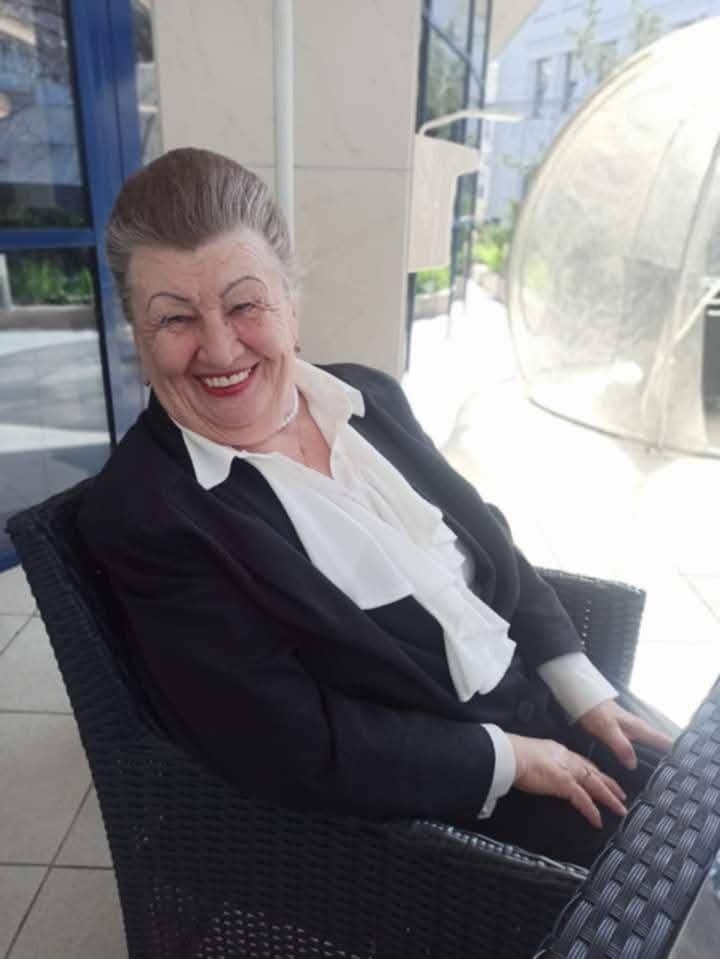
Signed by Prof. Florica R. Cândea
Member of UZPR, Arad Branch